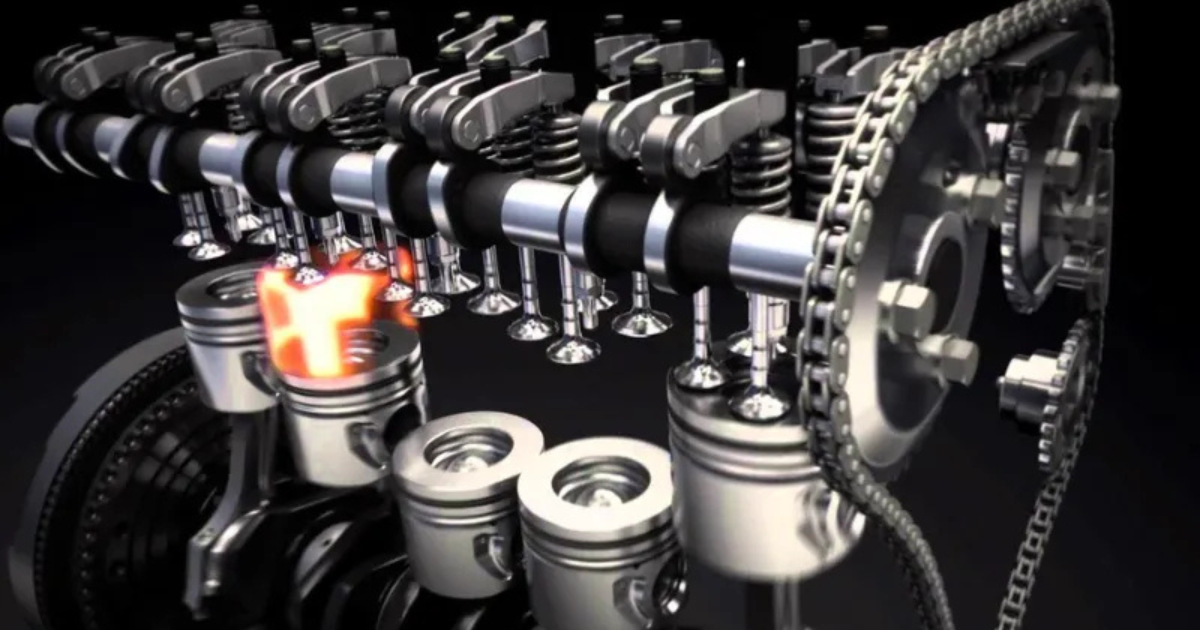
The internal combustion engine (ICE) is one of the most important inventions in modern transportation. It powers the majority of vehicles on the road today, from cars and motorcycles to trucks and generators. Understanding the basics of how an internal combustion engine works can help you appreciate the engineering behind everyday mobility and improve your knowledge of vehicle maintenance.
What is an Internal Combustion Engine?
An internal combustion engine is a type of engine where fuel is burned inside a confined space called the combustion chamber. The energy released from this combustion process is converted into mechanical power, which is used to move a vehicle.
Unlike external combustion engines, where fuel is burned outside the engine (such as in steam engines), ICEs generate power internally, making them more compact and efficient for automotive use.
Basic Principle of Operation
The working principle of an internal combustion engine is based on converting chemical energy from fuel into mechanical energy. This process involves controlled explosions within the engine’s cylinders.
When fuel burns, it produces high-pressure gases that push a piston downward. This movement is then converted into rotational motion by the crankshaft, which ultimately powers the wheels of the vehicle.
Main Components of an ICE
An internal combustion engine consists of several key components that work together:
- Engine Block: The main structure that houses cylinders
- Cylinder Head: Covers the cylinders and controls airflow
- Pistons: Move up and down inside the cylinders
- Crankshaft: Converts piston motion into rotation
- Camshaft: Controls valve timing
- Valves: Regulate air intake and exhaust gases
- Fuel Injector or Carburetor: Supplies fuel to the engine
- Spark Plug (in petrol engines): Ignites the air-fuel mixture
Each component plays a vital role in ensuring smooth and efficient engine operation.
The Four-Stroke Engine Cycle
Most internal combustion engines operate on a four-stroke cycle, which includes four stages:
1. Intake Stroke
The intake valve opens, and the piston moves downward, allowing air and fuel to enter the cylinder.
2. Compression Stroke
The piston moves upward, compressing the air-fuel mixture, which increases its energy potential.
3. Power Stroke
The compressed mixture is ignited (by a spark plug in petrol engines or by compression in diesel engines). This creates an explosion that pushes the piston downward, generating power.
4. Exhaust Stroke
The piston moves upward again, expelling burnt gases through the exhaust valve.
This cycle repeats continuously while the engine is running.
Types of Internal Combustion Engines
Internal combustion engines can be classified in several ways:
By Fuel Type:
- Petrol engines
- Diesel engines
- Gas-powered engines
By Cycle:
- Two-stroke engines
- Four-stroke engines
By Cylinder Arrangement:
- Inline engines
- V-type engines
- Flat (boxer) engines
Each type is designed for specific applications and performance requirements.
Advantages of Internal Combustion Engines
- High energy efficiency for transportation
- Compact and powerful design
- Widely available fuel infrastructure
- Suitable for a variety of vehicles
These advantages have made ICEs the dominant engine type for over a century.
Limitations and Challenges
Despite their benefits, internal combustion engines have some drawbacks:
- Produce emissions that contribute to air pollution
- Dependence on fossil fuels
- Require regular maintenance
- Generate heat and noise
Modern technologies are addressing these challenges by improving fuel efficiency and reducing emissions.
Future of Internal Combustion Engines
With the rise of electric vehicles, the role of internal combustion engines is evolving. However, they are still widely used and continue to improve through innovations like hybrid systems, turbocharging, and cleaner fuels.
Many manufacturers are focusing on making ICEs more efficient and environmentally friendly while transitioning toward sustainable alternatives.
Conclusion
The internal combustion engine remains a cornerstone of modern transportation, converting fuel into the mechanical power that drives vehicles. Its design, efficiency, and adaptability have made it one of the most influential technologies in history.
By understanding the basics of how an ICE works, you gain valuable insight into the mechanics of your vehicle and the science behind motion. Even as new technologies emerge, the internal combustion engine continues to play a vital role in powering the world.