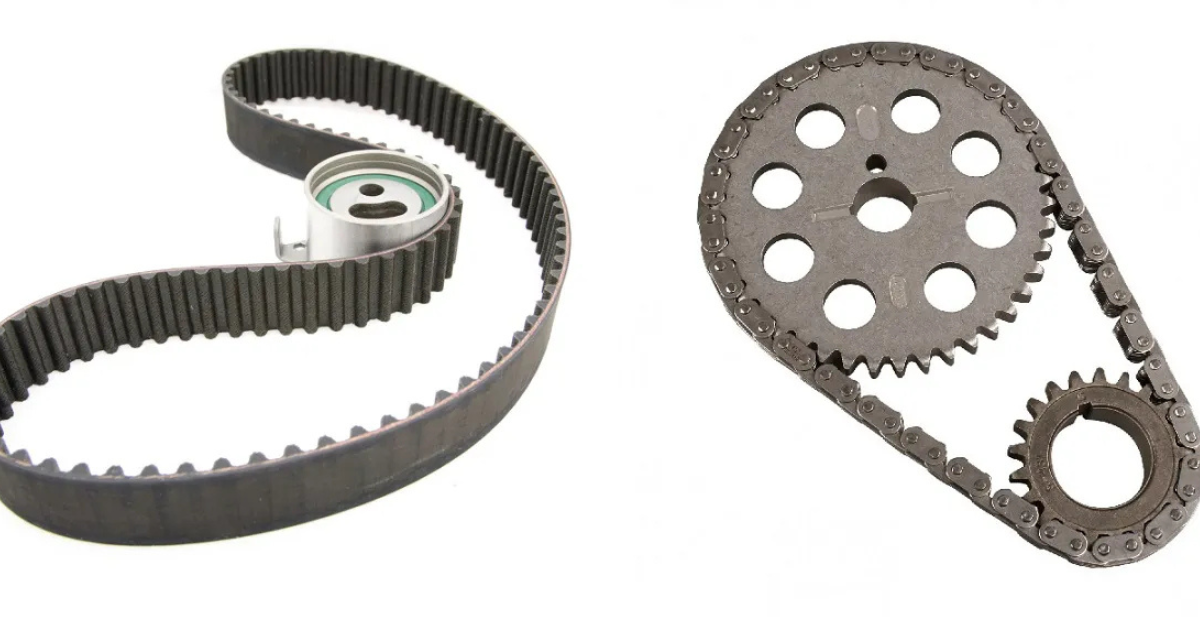
The timing system is one of the most critical parts of an internal combustion engine, ensuring that the camshaft and crankshaft work in perfect synchronization. This coordination allows the engine’s valves and pistons to move at the right time, preventing damage and ensuring smooth performance. Two common components used for this purpose are the timing belt and the timing chain. While they serve the same function, they differ in design, durability, maintenance, and cost.
What is a Timing Belt?
A timing belt is a reinforced rubber belt with teeth that grip the gears of the camshaft and crankshaft. It ensures that these components rotate in sync, maintaining proper engine timing.
Timing belts are typically made from durable rubber materials combined with fibers like fiberglass or Kevlar for added strength. They are commonly used in modern vehicles because they are lightweight, quiet, and cost-effective.
What is a Timing Chain?
A timing chain, as the name suggests, is a metal chain similar to a bicycle chain. It performs the same function as a timing belt but is made of metal, making it more durable and long-lasting.
Timing chains are usually located inside the engine and are lubricated by engine oil. This reduces friction and helps extend their lifespan.
Key Differences Between Timing Belt and Timing Chain
1. Material and Construction
Timing belts are made of rubber with reinforced fibers, while timing chains are made of metal. This difference significantly affects durability and maintenance.
2. Durability
Timing chains generally last longer than timing belts. In many cases, a timing chain can last the lifetime of the engine if properly maintained. Timing belts, however, need to be replaced at regular intervals, usually between 60,000 to 100,000 kilometers (or as recommended by the manufacturer).
3. Noise Levels
Timing belts operate quietly due to their rubber construction. Timing chains, being metal, tend to produce more noise, although modern designs have reduced this issue significantly.
4. Maintenance Requirements
Timing belts require periodic replacement, which can add to maintenance costs. Timing chains require less frequent replacement but depend heavily on proper engine lubrication. Poor oil maintenance can lead to chain wear.
5. Cost
Timing belts are cheaper to manufacture and replace, but since they require periodic changes, costs can add up over time. Timing chains are more expensive upfront but may be more economical in the long run due to their durability.
Advantages of Timing Belts
- Quiet operation
- Lower initial cost
- Lightweight design
- Easier and cheaper to replace
Timing belts are ideal for drivers who follow regular maintenance schedules and prefer lower upfront costs.
Advantages of Timing Chains
- Long lifespan, often lasting the life of the engine
- Greater strength and durability
- Less frequent replacement
- Better suited for high-performance engines
Timing chains are a good choice for those who want durability and are diligent about engine maintenance.
Disadvantages of Each
Timing Belt Disadvantages:
- Requires regular replacement
- Can fail suddenly if not maintained
- Replacement can be labor-intensive
Timing Chain Disadvantages:
- Noisier than belts
- More expensive to repair or replace
- Heavier and slightly less efficient
Which One is Better?
There is no one-size-fits-all answer. The choice between a timing belt and a timing chain depends on your priorities:
- If you prefer a quieter engine with lower initial costs, a timing belt may be suitable.
- If you want durability and fewer replacements over time, a timing chain is the better option.
It’s also important to follow the manufacturer’s recommendations for maintenance, regardless of which system your vehicle uses.
Conclusion
Both timing belts and timing chains play a crucial role in keeping your engine running smoothly by synchronizing its internal components. While they serve the same purpose, their differences in material, durability, and maintenance can significantly impact your vehicle ownership experience.
By understanding these differences, you can make informed decisions about maintenance and choose the type of engine system that best fits your needs. Regular inspections and proper care will ensure that either system performs reliably for years to come.